
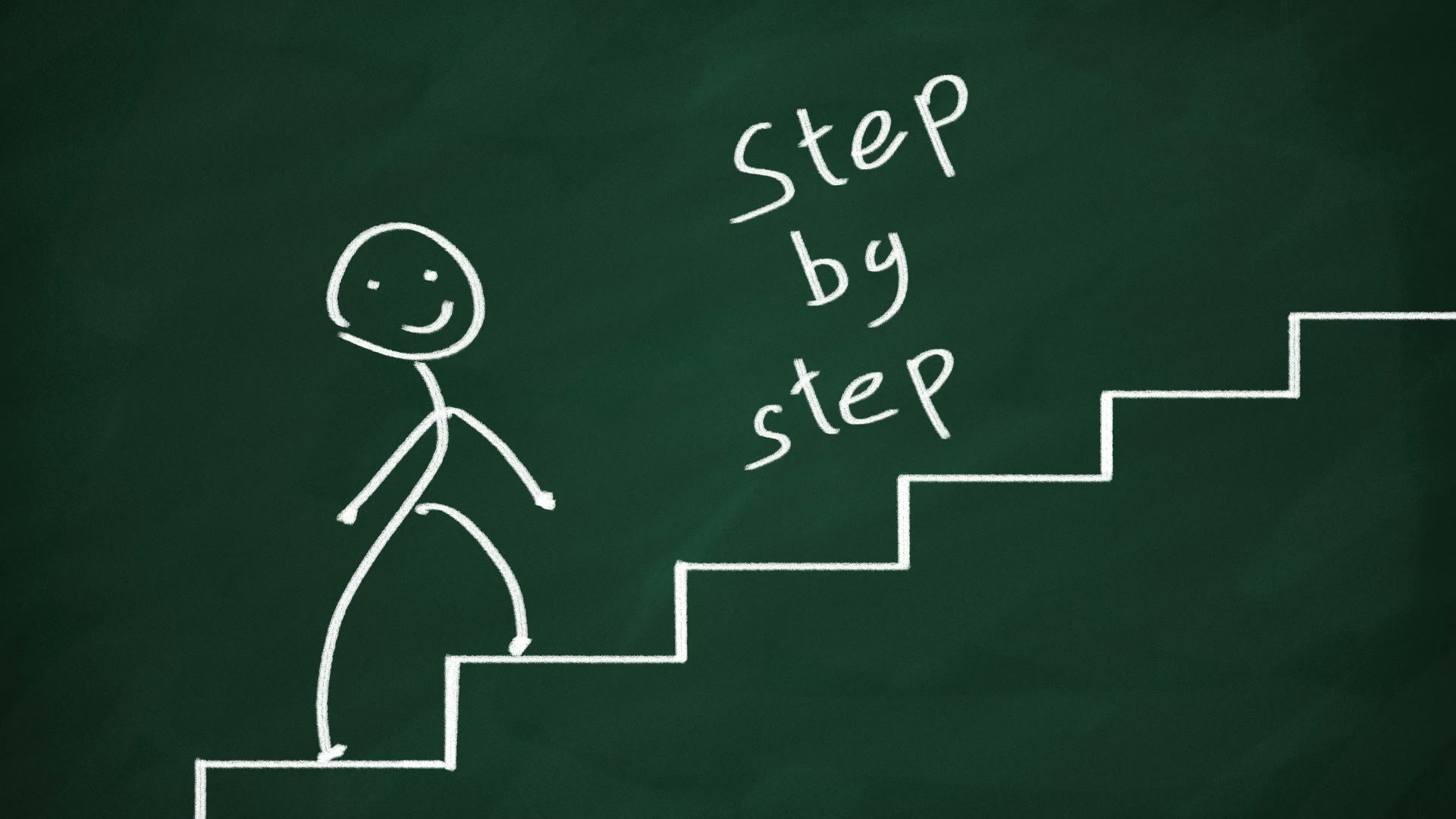
Your to-do list is lying to you.
“Launch the workshop” isn’t a task. It’s a project wearing a task’s clothes.
It’s been on your to-do list for months. You look at it most days and feel bad about it most days. Then you answer some emails, because at least you know how to do those.
You’re not lazy. You’re trying to start something that has no starting point.
Feeling overwhelmed is a sizing problem
Motivation isn’t your problem. Size is.
The fastest way to overwhelm yourself is to make something so big you can’t see how to break it down. Once you can’t see the pieces, you can’t see the first move. So you try to hold the whole thing in your head at once. You try to do everything, and you end up doing nothing.
I’ve spent 20+ years fixing how businesses work, and no shortcut has ever turned up. There’s a boring fix, though, and it works every time.
Break it down, then break it down again
Start with what you’re trying to achieve. Then:
- Split it into the big pieces of work that need to happen.
- Take each big piece, one at a time, and split that into its own big pieces.
- Under each of those, list the tasks that make it happen.
- Still feels heavy? Go down another layer. And another, if you need to.
You keep going until nothing on the page makes your stomach drop.
Say the goal is to run your first paid workshop. That’s the thing you can’t start. One layer down you’ve got the content, the venue, the pricing and the marketing. Still too big.
Take the venue. Under that sits a shortlist, the costs, a site visit and a booking. Getting closer.
Take the shortlist. List 5 venues you’d want to work with. Email each one to ask about dates. Find the hire cost for each.
Now you’ve got something you can do before your coffee goes cold.
How to tell you’ve gone small enough
A step is small enough when you can start it without asking yourself “how?”
“Sort out the venue” fails that test. “Email Sarah to ask what the hall costs on a Saturday” passes. You know who, you know what, and you’ll know when it’s done.
The finished list will look almost embarrassingly simple. Send an email to this person. Find a cost for that thing. Write a list of names. Good. Simple is what gets ticked off, and every tick gives you a small dopamine hit. Those add up faster than you’d expect.
A tiny step that gets done beats an impressive plan that sits there making you feel guilty.
Then commit to 10 minutes
You don’t have to do everything on the list. Commit to 10 minutes and one small step.
People rarely stop at 10. One task gets done, the next one is sitting right there looking easy, and before long there’s a chain of them behind you. Starting was the hard part, and you made starting tiny.
And if you do stop at 10 minutes? You’ve still sent the email, which is more than the giant line on your list managed in 3 months.
This is how the big rocks move. In corporate I led a Kaizen initiative for a Big 4 financial institution’s wealth operations. It saved $1m in 12 months, and that money came from small process improvements, like cutting a form from 16 pages to 4.
Nobody shoved a boulder. We chipped away with steps so small they felt a bit silly, until the thing nobody could start was done.
Your smallest possible step
Pick the line on your list that’s been haunting you. Break it down until the first step takes less than 10 minutes and needs no thinking. Then set a timer and do that one thing.
If you’d rather break it down with company, that’s what we do in the Milking Ducks community. Bring the big scary thing and we’ll help you find the first step.